Frog Stand: Learn It From Zero
If you have never balanced on your hands in your life, the frog stand is where you begin. It looks like a party trick, but it is the honest first step on the road to the planche — one of the most impressive skills in all of calisthenics. You do not need a gym, rings, or any strength background. You need a patch of floor, a little patience, and the willingness to feel wobbly for a few weeks. That wobble is not a sign you are behind. It is the exact thing you are here to train.
What Is the Frog Stand?
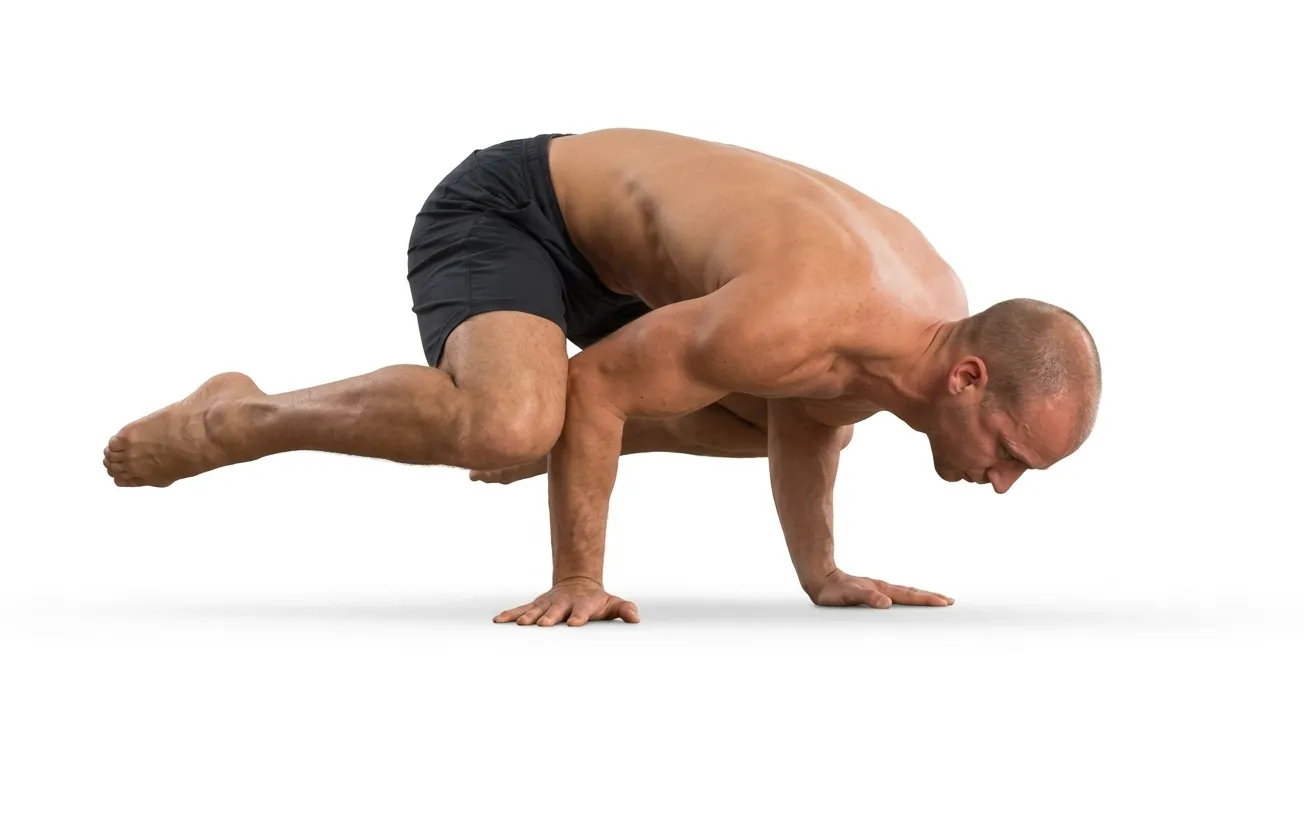
The frog stand is a hand-balancing hold where you rest your knees on the backs of your slightly bent upper arms and lean forward until your feet float off the ground. Your hands become your base, your shoulders take the load, and your job is simply to find and hold the balance point. It lives at the very start of the Planche (Floor) branch in the BodyTree progression system.
According to Overcoming Gravity by Steven Low, the frog stand is less a strength skill and more a balance skill. That distinction matters for a beginner: you are not trying to muscle your way into it. You are teaching your hands, wrists, and shoulders how to hold you up and how to make tiny corrections without panicking. Almost anyone can learn it, and the first genuine balance — even for one second — is a small win worth chasing.
Prerequisites
Here is the honest starting point, because there is no shame in beginning at zero: you do not need to already be strong. What you need is enough wrist comfort to bear weight on your palms and enough shoulder awareness to lean forward without flinching. If you can hold a solid plank for 30 seconds and rest your bodyweight on flat hands without wrist pain, you are ready to start finding the balance point today.
The only real gatekeeper is your wrists, and they are trainable. Spend five minutes before each session doing gentle wrist circles, palm presses, and finger stretches. If flat-hand loading is uncomfortable, place your hands on the edge of a low step or on two thick books so your wrists sit at a friendlier angle while you build tolerance.
The Progression Chain
This is the map from your first wobble to the full planche. The frog stand is the doorway, not the destination. Each step removes a little support and asks a little more of your straight-arm shoulder strength. You are at the beginning of that chain right now, and that is exactly the right place to be — every planche athlete started here, resting their knees on their elbows and trying not to tip over.
Sets, Reps, and Training Frequency
The unlock standard in BodyTree is 3 sets of a 30-second hold. Do not chase that number on day one. In the early weeks, accumulate short holds — even 3 to 5 seconds at a time — and add them up. Practising the frog stand 3 to 4 times per week works well because it is low-fatigue balance work rather than heavy strength work. Overcoming Gravity notes that this kind of hold can be trained frequently, in as many short sets as you need, without pushing to failure.
A simple beginner plan: 3 to 5 short rounds of finding the balance and holding it for as long as it stays clean, resting as needed, a few days a week. Track your best single hold. When it grows past 30 seconds and feels calm rather than frantic, you have earned the next step.
Coaching Cues
- Spread your fingers wide. Establish contact with all ten fingertips before shifting any weight forward. Your fingers are your steering.
- Lean, do not hop. The balance comes from leaning your shoulders forward past your hands until your feet naturally unload. Find the minimum lean that lifts the feet.
- Knees on the shelf. Rest your knees on the shelf created by your slightly bent elbows, then settle your weight back onto your hands to balance.
- Look slightly ahead. A soft forward gaze steadies the hold. Staring straight down invites the tip-forward panic.
Common Mistakes
- Rushing the lean. Weight forward too fast triggers the face-plant reflex. Move in small increments and let your hands learn the position.
- White-knuckle gripping. A crushing grip burns out your forearms fast. Grip firmly but relaxed — the lightest hold that keeps control.
- Skipping wrist prep. Loading cold wrists is the fastest way to a nagging ache that stalls your progress. Warm them up every single session.
- Rounding the upper back. Keep the shoulder blades spread and pulled down rather than hunched. A hunched setup builds a habit you will fight later in the chain.
Prehab: Protecting Your Wrists
The frog stand is your wrists' introduction to load, and Overcoming Tendonitis is clear that tendons adapt more slowly than muscles. That means the wrists can feel fine mid-session and grumble the next day if you rush the volume. Treat wrist care as part of the exercise, not an optional extra.
Before training, do gentle wrist circles, front-and-back palm rocks, and finger extensions for a few minutes. If you feel a specific ache on the palm side or the back of the wrist, ease off, reduce your hold time, and add light, controlled wrist curls and reverse wrist curls on your off days to build load tolerance progressively. A little daily conditioning beats a forced week followed by a painful layoff.
Longevity: Building a Base That Lasts
The temptation with any planche skill is to sprint toward the impressive version. Resist it. The reason the frog stand sits first is that it builds straight-arm shoulder and wrist resilience that every step above it depends on. Athletes who spend real time here — weeks, not one session — carry a healthier base into the tuck planche and beyond.
Keep the frog stand in your routine even after you unlock the next step. It stays a cheap, joint-friendly balance drill you can do anywhere as a warm-up or a skill primer. Consistency over intensity is the quiet secret of every calisthenics athlete who is still training pain-free years later.
Related Guides
Frequently Asked Questions
Is the frog stand hard for beginners?
It is challenging at first because balancing on your hands feels strange, but it takes almost no baseline strength. Most beginners find their first short balance within a week or two of daily practice.
Will the frog stand hurt my wrists?
It can if you skip preparation. Warm your wrists up every session, build hold time gradually, and load your hands on a raised surface if flat-hand pressing is uncomfortable at first.
How long should I hold a frog stand?
The goal is three sets of a 30-second hold. Early on, accumulate shorter holds of a few seconds each and add them up rather than forcing one long, shaky hold.
What comes after the frog stand?
The straight-arm frog stand, where you remove the elbow shelf and rely on locked-out arms and shoulder strength. That is the bridge toward the tuck planche and eventually the full planche.
BodyTree tracks your progression through all 251 calisthenics skills — automatically generated programs, video proof, and a community of serious practitioners.
Get BodyTree — Free on iOS & Android