
Full Squat: How to Learn It, Train It, and What Comes Next
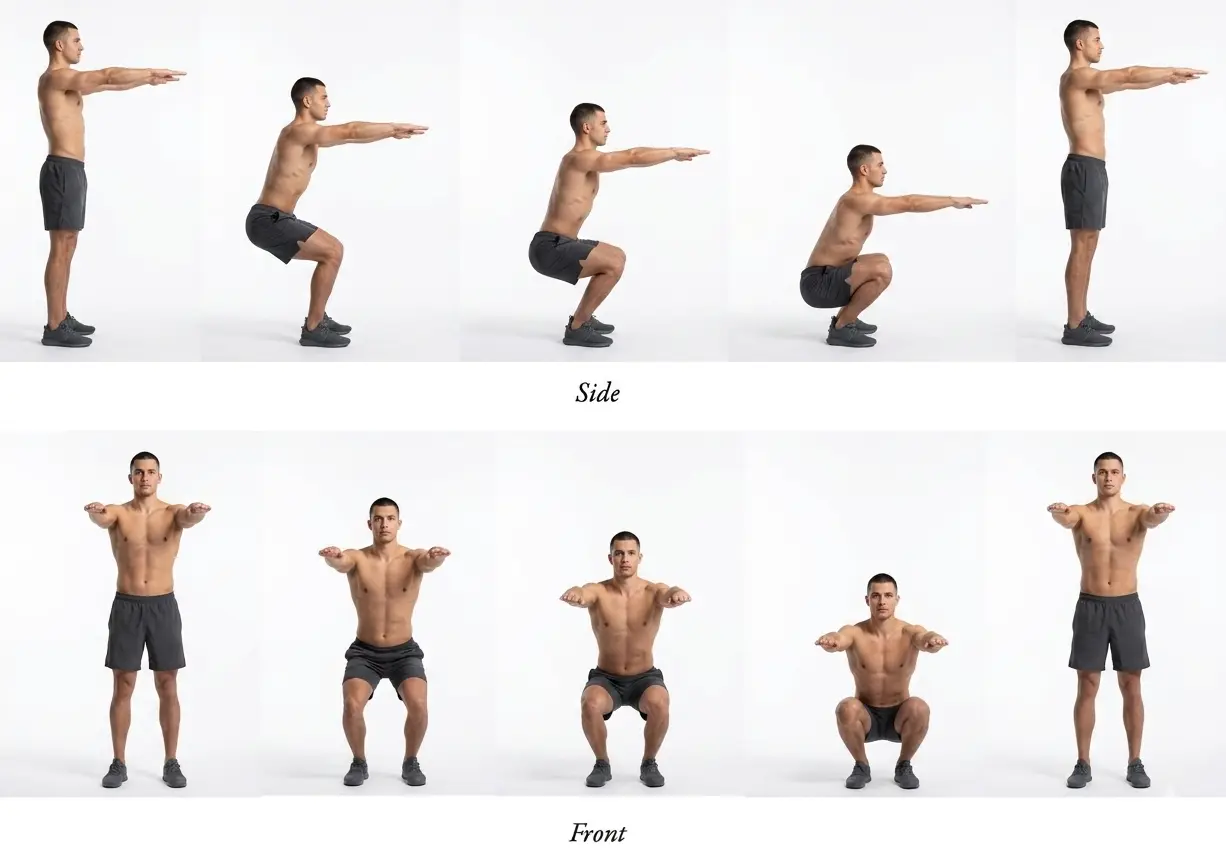
If you can stand up and sit down, you can learn the full squat. There is no gym, no equipment, and no starting level of fitness required here. The full squat is simply the deep, natural resting position your body was built to reach: hips sinking below your knees, heels flat on the floor, torso tall. Toddlers do it without a second thought, and getting it back is one of the most rewarding early wins in calisthenics. If your heels lift or your hips feel tight today, that is normal and completely fixable. This guide meets you exactly where you are and walks you all the way to a clean, controlled deep squat.
What Is the Full Squat?
The full squat is a bodyweight squat taken to its complete range of motion: you descend until your hamstrings brush your calves, pause at the bottom with your heels planted, then stand back up with control. It sits in the Squats branch of the BodyTree tree, one step past the parallel squat. Where a parallel squat stops when your thighs are level with the ground, the full squat keeps going into that deep, folded position at the bottom.
According to Overcoming Gravity by Steven Low, training a movement through its full range builds more strength and more muscle than cutting the range short. The bottom of a squat is the hardest part, which is exactly why it is worth owning. Reaching full depth also keeps your hips, knees, and ankles mobile in a way that partial squats never will.
Prerequisites
You do not need much to start, and if the deep position feels out of reach today, the drills below will build it. Ideally you can already perform a parallel squat for 3 sets of 15 clean reps, stopping when your thighs reach level with the floor. That tells us your legs are ready for more range. From there, the full squat is mostly a question of ankle and hip mobility plus a little confidence sinking into the bottom. Nobody is born stiff for good; mobility responds quickly to consistent, gentle practice.
The Progression Chain
This is the road for your lower body. If the full squat feels far away, back up to the parallel squat or even the sit-to-stand, where you rise out of a chair. There is no shame in starting earlier on the chain; every strong squatter began there. Once the full squat is comfortable, the side-to-side squat begins shifting weight onto one leg, which is the true doorway toward the single-leg pistol squat down the line.
Sets, Reps, and Training Frequency
The full squat is a concentric movement, so the BodyTree unlock standard is 3 sets of 15 full-depth reps. Reaching that mark tells you the pattern is genuinely strong through the whole range, not just the top few inches.
Train your legs 2 to 3 times per week, leaving at least a day between sessions so the muscles can recover and adapt. Start each set only as deep as you can go with your heels down, and let the depth improve week by week. Consistency beats intensity every single time; three honest sessions a week for a month will transform your squat.
Coaching Cues
- Heels stay glued down. If they lift, you have hit your current ankle range. Squat only as deep as you can keep them planted, and the depth will grow.
- Sink slowly, stand with intent. Lower under control for two to three seconds, then drive up through your whole foot.
- Keep the chest tall. Let your torso stay as upright as your mobility allows rather than folding forward at the bottom.
- Knees track over the toes. Let the knees travel forward and outward in line with your feet, never caving inward.
- Breathe at the bottom. A calm breath in the deep position teaches your body that it is a place to rest, not to rush out of.
Common Mistakes
- Cutting the depth short. Stopping at parallel and calling it a full squat trains partial strength. Chase real depth, even if it means fewer reps at first.
- Forcing depth with lifting heels. Bouncing into the bottom on your toes skips the mobility work. Slow down and stay flat-footed.
- Rushing the pattern. Fast, uncontrolled reps hide weak spots. Own each rep top to bottom.
- Ignoring mobility. If ankles or hips are the limit, a few minutes of daily deep-squat holds and calf stretching will unlock the position faster than grinding reps alone.
Longevity and Mobility
The deep squat is as much a mobility position as a strength move, and keeping it is one of the best things you can do for lifelong knee, hip, and ankle health. A simple habit: sink into a supported deep squat for 30 to 60 seconds a day, holding onto a doorframe or post for balance if you need it. Over a few weeks that daily hold quietly restores range most adults lost from years of sitting in chairs. Treat the bottom of the squat as a place your body is allowed to live, not just pass through, and it will stay yours for decades.
Related Guides
Frequently Asked Questions
Why do my heels lift when I squat deep?
Lifted heels usually mean limited ankle mobility, which is extremely common from years of sitting. Squat only as deep as you can keep your heels flat, and add a daily 30 to 60 second supported deep-squat hold plus gentle calf stretching. The range typically opens up within a few weeks.
Is a deep squat bad for your knees?
For healthy knees, controlled deep squatting is safe and actually helps keep the joint strong and mobile. Overcoming Gravity notes that full range of motion builds more strength than partial reps. Move slowly, keep your knees tracking over your toes, and build depth gradually rather than bouncing into the bottom.
How long until I can do a full squat?
Many beginners reach a clean full-depth squat within 4 to 8 weeks of consistent practice, especially when they pair squat training with a short daily mobility hold. If you are starting from very tight hips or ankles it may take a bit longer, and that is completely normal.
Do I need weights or a gym?
No. The full squat is a bodyweight move you can train anywhere with zero equipment. Weights only enter the picture much later on the chain, once single-leg pistol squats become easy.
BodyTree tracks your progression through all 242 calisthenics skills — automatically generated programs, video proof, and a community of serious practitioners.
Get BodyTree — Free on iOS & Android