Prone Scapular Squeeze: How to Learn It, Train It, and What Comes Next
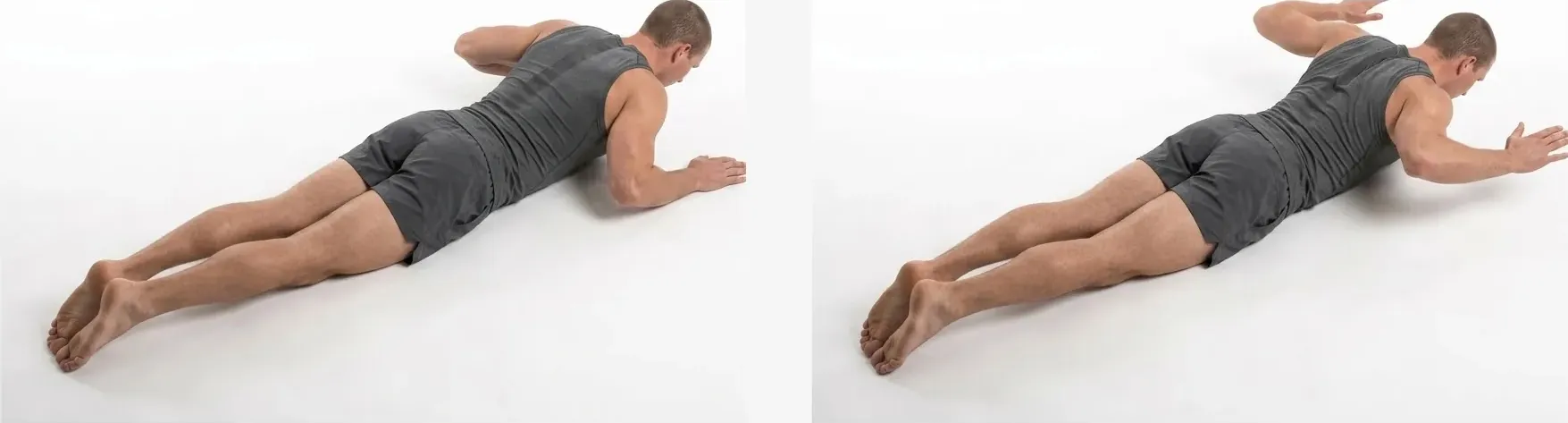
If you have never done a pull-up and are not sure your back muscles even switch on, this is where you start. The prone scapular squeeze asks nothing of you except a patch of floor and a few minutes. You lie face down, draw your shoulder blades together, and learn to feel the muscles that every future pull will depend on. There is no bar to hang from, no strength requirement, and nothing to be intimidated by. This is the honest first rung of the pulling ladder, and it is one that anyone can reach today, at any age, from any starting point.
Most beginners try to jump straight to rows or pull-ups and wonder why they only feel their arms. The reason is almost always the same: the shoulder blades are not doing their job. According to Overcoming Gravity, horizontal pulling depends on the scapular retractors, and in most people who have spent years sitting or pushing, those muscles are underused and weak. The prone scapular squeeze wakes them up in isolation, so that when you do reach a bar, the pull comes from your back instead of leaking away into your biceps.
What Is the Prone Scapular Squeeze?
The prone scapular squeeze is a floor-based isolation drill for the muscles that pull your shoulder blades together and down. You lie face down with your arms out in front of you, then squeeze your shoulder blades toward your spine, lift your hands a few centimetres off the floor, hold for a beat, and release with control. That is the whole movement.
It sits at level 1 of the Inverted Rows branch, the very first node in the horizontal-pulling chain. Its job is not to make you strong on its own but to teach your nervous system a pattern. Overcoming Gravity describes how a beginner's brain sequences the scapular muscles inefficiently at first, which is exactly why learning proper technique early matters so much. This drill gives your brain a low-stakes place to practise that sequencing before any real load is added.
Prerequisites: What You Need Before You Start
Almost nothing. This is a genuine ground-floor exercise. You do not need a pull-up bar, rings, a gym membership, or any prior training. If you can lie on your stomach and move your arms, you can do this today.
There is no earlier progression to unlock, because this is the start of the chain. The only thing to bring is patience: the goal is not to lift your hands as high as possible but to feel your shoulder blades drawing together. If you feel the movement in your lower back or your neck instead, you are compensating. Relax those areas and focus the effort between your shoulder blades.
The Progression Chain: Where This Leads
The prone scapular squeeze is the first step on a clear road toward real rows and, eventually, pull-ups. Each step adds a little more load by changing your body angle, so you are never asked to make a big jump.
Master the squeeze for three solid sets, and the next stop is Incline Rows, where you pull your chest to a waist-high bar or edge with your body at a steep, forgiving angle. From there the road continues to full Inverted Rows and beyond. The skill you build here, keeping the shoulder blades engaged, is the same skill that carries all the way up the chain.
Sets, Reps, and Frequency
Because this is a light activation drill, you can train it often. Aim for 3 sets of 8 to 12 slow, deliberate repetitions, pausing for one to two seconds at the top of each squeeze. Quality beats quantity here: three clean reps where you truly feel the shoulder blades working are worth more than fifteen sloppy ones.
You can do it two or three times a week as its own mini-session, or use it as a warm-up before any pulling work. The unlock target in BodyTree is 3 sets. Once holding those squeezes feels easy and you can clearly feel your back rather than your arms, you are ready to progress to Incline Rows.
Coaching Cues
- Lie face down, arms out in front. Think of making a wide Y or T shape, whichever lets you feel the squeeze best.
- Squeeze the shoulder blades together first. Initiate from the back, not the hands. Imagine pinching a pencil between your shoulder blades.
- Lift the hands only slightly. A few centimetres is plenty. The lift is a result of the squeeze, not the goal itself.
- Keep the neck long and relaxed. Do not crane your head up. Look at the floor to keep the effort in your back.
- Lower with control. Release slowly rather than dropping. The lowering phase builds just as much awareness as the lift.
Common Mistakes
- Pulling with the lower back. Arching hard and lifting the chest turns this into a back extension. Keep the chest heavy and move only the shoulder blades.
- Shrugging toward the ears. The blades should draw together and slightly down, not up. Shrugging recruits the neck and misses the target muscles.
- Rushing the reps. Speed hides weakness. Slow down so you can feel each squeeze; the point is to build the mind-muscle connection.
- Lifting the hands too high. Big lifts mean you are recruiting your arms and lower back. Keep the range small and the focus tight on the scapula.
Related Guides
Frequently Asked Questions
Do I need any equipment to do a prone scapular squeeze?
No. This is a floor exercise. You only need enough space to lie face down. A mat is nice for comfort but not required, which makes it one of the most accessible ways to begin pulling training at home.
Why can't I just start with rows or pull-ups?
You can try, but most beginners only feel their arms because the shoulder-blade muscles are not yet active. Overcoming Gravity notes that the scapular retractors are commonly underdeveloped. Training the squeeze first teaches your back to lead the pull, which makes every later exercise more effective and safer for the shoulders.
How do I know when I'm ready to move on?
When you can complete 3 sets of slow squeezes and clearly feel the muscles between your shoulder blades doing the work rather than your arms or lower back, you are ready to progress to Incline Rows, the next step in the chain.
BodyTree tracks your progression through all 242 calisthenics skills — automatically generated programs, video proof, and a community of serious practitioners.
Get BodyTree — Free on iOS & Android