
Tuck Front Lever: How to Learn It
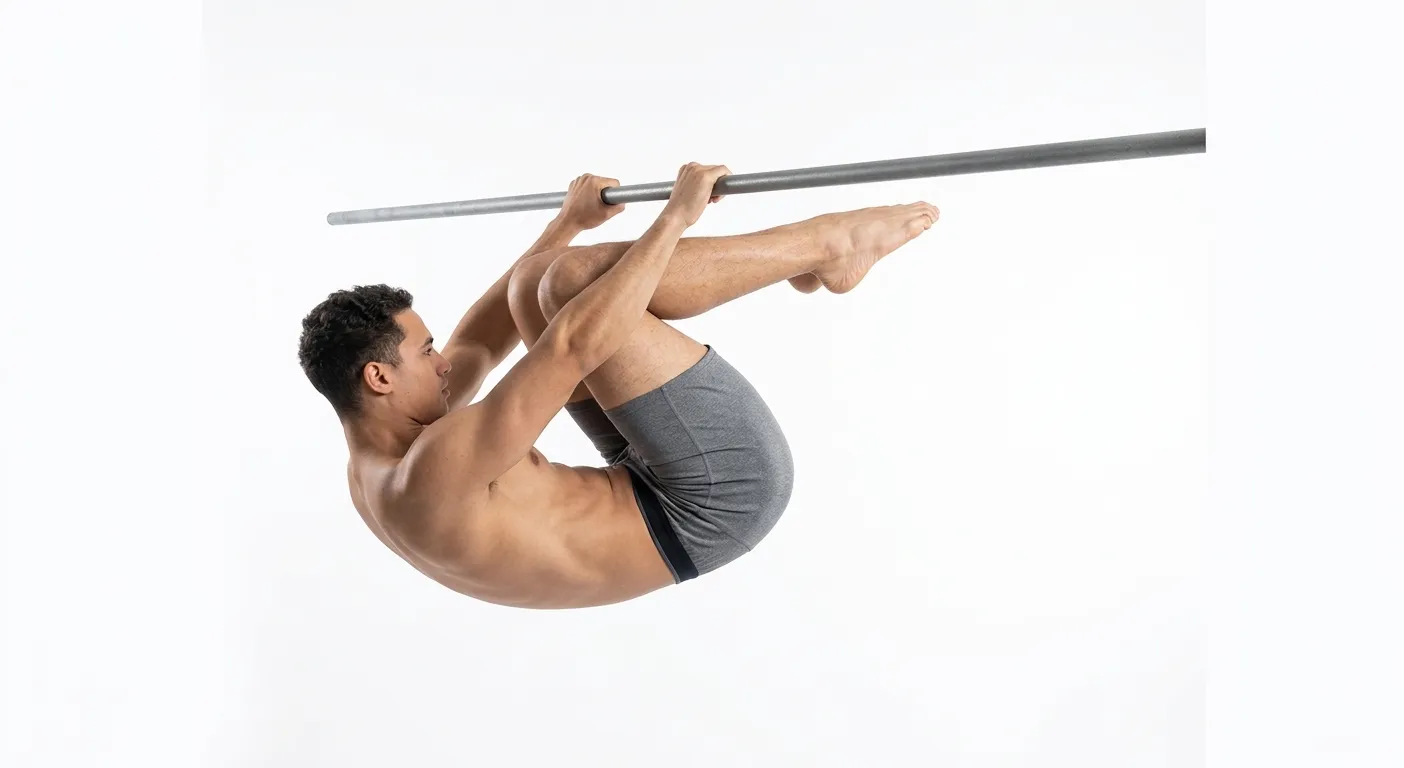
If the full front lever looks impossibly far away, good news: the tuck front lever is where everyone actually begins, and you do not need a gym, elite genetics, or years of training to start working toward it. You need a bar or a set of rings, the ability to hang, and a little patience. This guide meets you at the very first rung. Before the tuck front lever there is only a dead hang and learning to control your shoulder blades, and that starting point is open to complete beginners. The lever itself is the destination, not the price of entry.
What Is the Tuck Front Lever?
The tuck front lever is a straight-arm hold where you hang under a bar or rings, pull your body up until it is horizontal, and hold that flat line with your knees tucked tightly to your chest. Tucking the knees shortens the lever, which makes the hold dramatically easier than the full front lever while training exactly the same muscles: the lats, the scapular retractors, and the deep core. It sits in the Pull branch of the BodyTree skill tree as the entry point of the front lever progression, rated level 4 of 16. Do not let that number scare you off. A level 4 skill is reachable for a motivated beginner in a few months of consistent, unhurried practice.
Where a Beginner Actually Starts
You almost certainly should not attempt a tuck front lever on day one, and that is completely normal. Your real starting point is simpler and it builds the exact foundation the lever needs.
- A solid dead hang. Hang from the bar with straight arms for 20 to 30 seconds. This conditions your grip, elbows, and shoulders for straight-arm loading.
- The scapular pull. From that dead hang, pull your shoulder blades down and together without bending your arms. Your body rises a few centimeters. This small movement teaches the shoulder control every lever depends on.
- Skin the cat, done slowly. Rotating through a controlled skin the cat builds the straight-arm shoulder strength and confidence to hold your body away from the bar.
Own these first. They are not a warm-up you rush through; they are the skill in miniature. According to Overcoming Gravity by Steven Low, straight-arm scapular strength is the quality that unlocks the entire lever family, and it is trained from the very first hang.
The Progression Chain
Every step opens the body a little more, lengthening the lever and adding load. The strategy for the whole journey is the same: hold a position until it is comfortable, then extend your legs a few centimeters and repeat. You are always just widening the angle you already own.
Sets, Reps, and Training Frequency
The tuck front lever is an isometric hold, so you train time, not reps. The BodyTree unlock standard is 3 sets of a 30-second hold. Early on you may only manage 5 to 10 seconds, and that is exactly where to begin. Accumulate short, clean holds and let the total time climb week by week. Train pulling 2 to 3 times per week with at least a day of rest between sessions, since straight-arm holds load the connective tissue of the elbows and shoulders harder than they load muscle, and that tissue adapts more slowly. Quality over grind wins here every time.
Coaching Cues
- Depress and retract the scapulae. Pull your shoulder blades down and back before anything else. The hold is initiated from the shoulder blades, not the arms.
- Press the bar toward your feet. Imagine pushing the bar down toward your toes rather than pulling yourself up. This straight-arm cue loads the lats correctly and stops the hips from sagging.
- Tuck tight, stay horizontal. Knees glued to the chest, hips at shoulder height. A flat body line is the whole exercise.
- Breathe. Shallow steady breaths keep the core braced without you holding your breath and burning out early.
Common Mistakes
- Letting the hips sag below the shoulders. A V-shape means the lats are not firing or the tuck has loosened. If the hips drop, the set is over. Rest and start fresh rather than grinding out a sloppy hold.
- Bending the arms. The front lever is a straight-arm skill. Bent elbows turn it into a different, easier exercise and skip the strength you are trying to build.
- Chasing full extension too soon. Opening the tuck before you own a clean 30-second hold just teaches your body to sag. Extend the knees a few centimeters at a time.
- Training it every day. More is not faster here. Straight-arm tissue needs recovery, and rest is where the adaptation happens.
Prehab: Protecting Your Elbows and Shoulders
Straight-arm holds place a large, steady demand on the elbows and the biceps tendon, so a little prevention goes a long way. Overcoming Tendonitis notes that a fixed bar locks the hands and can aggravate the elbow tendons in some trainees, while gymnastics rings allow the hands to rotate freely and often reduce that strain. If your elbows start clicking or aching, training the tuck front lever on rings is a sensible switch. Ease into straight-arm loading gradually, keep a thorough warm-up of wrist circles and light scapular pulls before every session, and never jump straight from cold into a maximal hold.
Longevity: Building Balance Around the Skill
The front lever is a powerful pulling exercise, and Overcoming Gravity recommends pairing pulling and pushing work to keep the shoulders balanced over the long run. Horizontal pulling like rows strengthens the scapular retractors and posterior shoulder that the lever also demands, while a habit of only vertical pulling and pressing can pull you into a hunched posture over months and years. Round out your training with rows and some overhead pressing so the shoulder you are building stays healthy for the decade of training ahead, not just the next month.
Related Guides
Frequently Asked Questions
Is the tuck front lever good for beginners?
Yes. It is the easiest true front lever position and the intended starting point of the progression. A beginner who can hold a dead hang and control their shoulder blades can begin working toward it, typically reaching a solid hold within a few months of consistent practice.
How long should I hold a tuck front lever?
Aim for 3 sets of 30 seconds with a flat body line. Early holds of 5 to 10 seconds are completely normal. Accumulate short, clean holds and let the total time grow week by week.
Bar or rings for the tuck front lever?
Both work. Rings let the hands rotate freely, which can be easier on the elbows if you feel any strain, while a fixed bar is slightly more stable to learn on. If your elbows ache, switch to rings.
Do I need to bend my arms to hold it?
No. The front lever is a straight-arm skill. Bending the elbows turns it into an easier, different exercise and skips the straight-arm strength you are training.
BodyTree tracks your progression through all 251 calisthenics skills — automatically generated programs, video proof, and a community of serious practitioners.
Get BodyTree — Free on iOS & Android