
Wall Pushups: How to Learn It
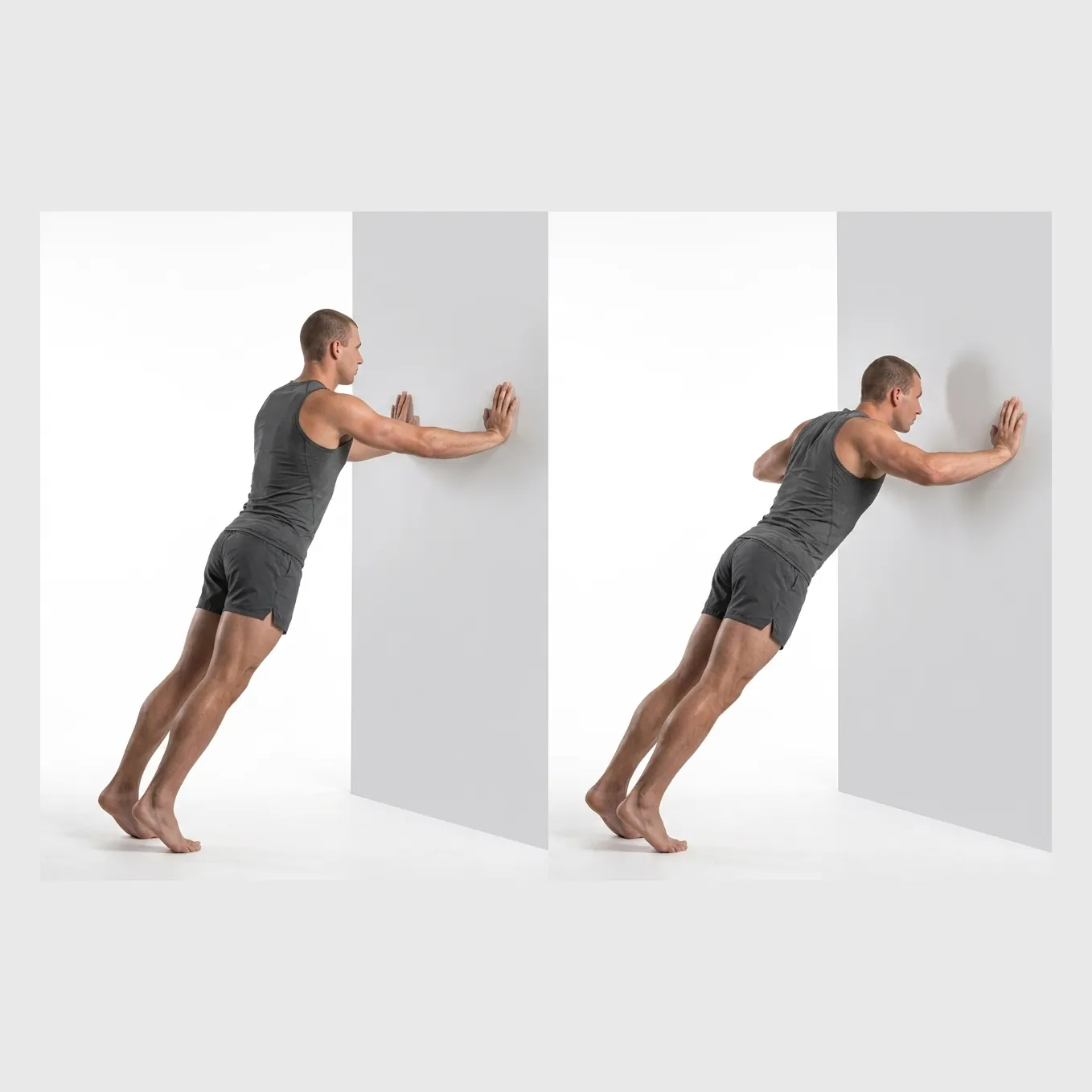
If you have never trained before and the idea of dropping to the floor for a pushup feels impossible, this is the right place to start. You are not behind, and you do not need to "get in shape first." The wall pushup exists precisely so that a complete beginner can build pressing strength today, standing up, using nothing but a wall. It is the very first rung of the Pushups branch in BodyTree, and almost anyone can do a few reps on day one. From here, every harder pushup becomes a matter of patience rather than talent.
What Is the Wall Pushup?
A wall pushup is a horizontal press performed standing, with your hands flat against a wall at roughly chest height. You lean in until your chest nearly touches the wall, then push yourself back to a straight-arm position. It trains the same muscles as a floor pushup — your chest, shoulders, and triceps — but with a tiny fraction of the load, because most of your bodyweight stays on your feet.
The beauty of the wall pushup is that it is infinitely adjustable. The higher your hands and the more upright your body, the easier it is. As you get stronger you simply step your feet back and lower your hands, and the same movement quietly becomes harder. It sits at Level 1 of the Pushups branch, the gentlest horizontal press in the whole system.
Prerequisites
There are none. That is the point. You do not need any prior strength, any equipment, or any experience to begin wall pushups. If you can stand and reach a wall, you can start. The only thing to check is that you have a stable, solid wall (not a wobbly door) and enough floor space to angle your feet back.
According to Overcoming Gravity by Steven Low, the pushup family is scaled by inclining the body — placing your hands on an elevated surface like a wall, a countertop, or stairs — so that beginners can train the exact same pattern at a difficulty they can actually control. The wall is simply the most inclined, most forgiving version of that idea.
The Progression Chain
Wall pushups are the entry point. Once they feel easy, you lower the angle: from the wall to a countertop, to stairs, then down to your knees, and finally to a full standard pushup on the floor. Each step keeps the same movement and adds a little more of your bodyweight. You are never jumping to something unfamiliar, only asking your body to press a slightly heavier version of a move it already knows. In BodyTree, clearing the unlock criteria on wall pushups opens up Kneeling Pushups as your next milestone.
Sets, Reps, and Training Frequency
Wall pushups are a concentric exercise, so the BodyTree unlock standard is 3 sets of 15 clean reps. Do not chase that number on the first day. Start with whatever you can do with good form — even if that is 3 sets of 5 — and add a rep or two each session.
Train pushing two or three times per week, leaving at least a day of rest between sessions so your muscles can recover and adapt. Consistency matters far more than intensity here. Three short, honest sessions a week for a month will take a true beginner from wall pushups toward their knees. When 3 sets of 15 feel controlled and unrushed, step your feet back or lower your hands, and let the movement get harder.
Coaching Cues
- Straight line, head to heels. Squeeze your glutes and gently brace your abs so your body stays rigid like a plank leaning into the wall. Do not let your hips sag or pike.
- Hands at chest height, shoulder width. Place your palms flat on the wall, roughly level with your chest.
- Elbows tucked, not flared. Overcoming Gravity warns against letting the elbows flare out to ninety degrees; keep them angled somewhere between zero and forty-five degrees from your body to protect the shoulders.
- Full range every rep. Lower until your chest nearly brushes the wall, then push all the way back to straight arms. Partial reps only build partial strength.
- Control the lean in, drive the push out. Move down slowly and press back with intent.
Common Mistakes
- Standing too close to the wall. If it feels like nothing, step your feet back. The angle is your difficulty dial.
- Sagging or arching the hips. A dropped midsection turns the exercise into a back stretch. Overcoming Gravity notes that arching engages the psoas and can cause lower-back discomfort, so keep the glutes and abs switched on.
- Rushing the reps. Bouncing off the wall robs the muscles of the work. Slow down and feel the press.
- Skipping ahead too soon. There is no prize for doing floor pushups badly. Earn the full range at each stage before you lower the angle.
Related Guides
Frequently Asked Questions
I have never exercised. Are wall pushups really enough to build strength?
Yes. For a true beginner, wall pushups load the chest, shoulders, and triceps enough to drive real adaptation. As you get stronger you lower the angle, which keeps the same movement challenging. Strength is built by consistently pushing a little more than last time, not by starting hard.
How long until I can do a normal floor pushup?
It varies, but a beginner training pushing 2 to 3 times per week can often progress from wall pushups through kneeling pushups to their first standard pushup in roughly 8 to 12 weeks. The key is earning full range at each stage before moving on.
How do I make wall pushups harder without leaving the wall?
Step your feet further back and lower your hand position. A more horizontal body puts more of your weight through your arms. When even the lowest comfortable angle feels easy for 3 sets of 15, it is time to move to a countertop or stairs.
My lower back feels it more than my chest. What am I doing wrong?
Your hips are probably sagging. Squeeze your glutes and brace your abs to hold a straight plank line. Overcoming Gravity explains that arching during pushups pulls on the psoas and can cause back discomfort, so keeping the core switched on fixes both the feel and the form.
BodyTree tracks your progression through all 251 calisthenics skills — automatically generated programs, video proof, and a community of serious practitioners.
Get BodyTree — Free on iOS & Android