
Kneeling Pushups: How to Learn It
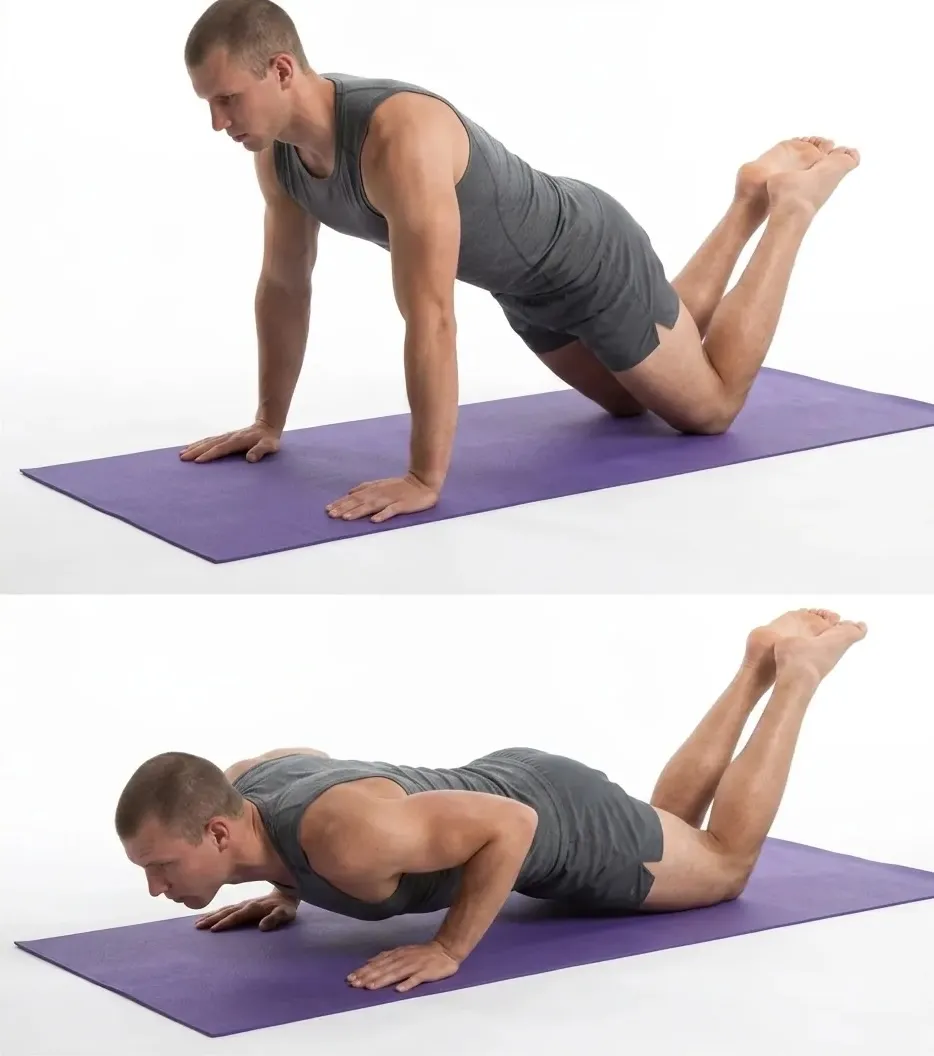
If a full pushup still folds you to the floor, nothing is wrong with you. You have simply not built the pressing strength yet, and that is exactly what the kneeling pushup is for. You do not need a gym, equipment, or any background in training. You need a patch of floor and a few minutes. Kneeling pushups sit right between the wall pushup, which most people can already do, and the standard pushup, which can feel a world away when you are starting from zero. By dropping to your knees you take a big chunk of bodyweight out of the movement while keeping the exact same pressing pattern, so every rep is teaching your chest, shoulders, and triceps the real thing at a load you can actually control. This guide walks you through what the exercise is, how to set it up, how many sets and reps to aim for, and the small milestones that quietly turn into your first full pushup.
What Is the Kneeling Pushup
A kneeling pushup is a standard pushup performed from your knees instead of your toes. Your hands sit under your shoulders, your body holds a straight line from your knees to the top of your head, and you lower your chest toward the floor before pressing back to a full lockout. Because your knees rest on the ground, you are pressing a smaller fraction of your bodyweight than in a full pushup, which is what makes it the ideal bridge between wall pushups and the floor.
It trains the same muscles you will rely on for every pressing skill that comes later: the chest, the front of the shoulders, and the triceps, with the core working quietly to keep your body rigid. According to Overcoming Gravity by Steven Low, the shoulder blades should spread apart and settle down at the top of each rep, then draw together naturally as you descend. You do not need to think hard about that at first. If you keep your body straight and move through the full range, your shoulder blades will do the right thing on their own.
Prerequisites: Where a Beginner Actually Starts
The honest entry point below the kneeling pushup is the wall pushup. If you can complete three sets of wall pushups with a straight body and full range, you are ready to move to your knees. If wall pushups still feel shaky, spend another week or two there first. There is no rush and no shame in it; the wall is a legitimate training tool, not a beginner's cage.
You do not need strong wrists, a warmed-up gym body, or any flexibility work to begin. If your wrists feel pinched on the floor, place your hands on a low, stable surface such as a couch edge or a set of books, which raises your torso and lightens the load further. As you get stronger you lower the surface until you are pressing from the floor on your knees. That single adjustment, raising or lowering your hands, is your volume dial for the whole progression.
The Progression Chain
Kneeling pushups live in the middle of the horizontal pressing chain. Below them are wall pushups, the gentlest press where higher hands mean an easier rep. Above them are standard pushups from the toes, then diamond pushups with the hands close together for extra triceps demand. Each step keeps the same movement and simply adds load, so the strength you build on your knees carries directly into the next rung.
To move on from the kneeling pushup, the unlock target is three sets of fifteen clean reps. Overcoming Gravity uses the same rule of thumb for pushup regressions: once you can perform sets of roughly fifteen to twenty solid repetitions, it is time to make the movement harder rather than just chasing higher rep counts. When you hit that mark on your knees, start mixing in standard pushups from the toes and let the two live side by side until the toe version takes over.
Sets, Reps, and Frequency
Aim for three sets of kneeling pushups, resting about ninety seconds between sets, two or three times per week on non-consecutive days. Early on you might only manage six or eight clean reps per set, and that is a perfectly good place to begin. Add a rep or two each week as it feels manageable, and keep every rep honest rather than grinding out sloppy ones to hit a number.
Your goal is three sets of fifteen full-range reps. When you can do that comfortably, you have the strength base to start attempting standard pushups. Consistency matters far more than intensity here. Two or three focused sessions every week, repeated for a month or two, will move you further than one heroic session that leaves you too sore to train again. Pressing muscles recover quickly, so a rest day between sessions is usually plenty.
Coaching Cues
- Knees down, hands under shoulders. Set your hands directly beneath your shoulders, not out in front, so your elbows can track cleanly.
- Straight line from knees to head. Squeeze your glutes and brace your abdominals so your hips neither pike up nor sag down. Your body should move as one rigid unit.
- Elbows tucked, not flared. Keep your elbows at roughly a thirty to forty-five degree angle from your torso. Flaring them out to ninety degrees stresses the shoulder and, per Overcoming Gravity, is the technique fault most likely to lead to irritation over time.
- Chest to the floor, full lockout at the top. Lower until your chest is an inch or two off the ground, then press all the way to straight arms. Do not shortcut the range to chase reps.
Common Mistakes
- Cutting the range short. The most common error is bending only halfway down. Overcoming Gravity is blunt about this: shortcutting the range yields more reps but does not build the strength you are training for. Touch your chest close to the floor every time.
- Sagging or piking hips. Letting the hips drop turns the movement into a lower-back stretch, while piking them up shifts the load off your chest. Brace your midsection and keep the knees-to-head line straight.
- Flared elbows. Wide, chicken-winged elbows feel easier but load the shoulder joint poorly. Keep them tucked closer to your ribs.
- Rushing the reps. Speeding through with bounce robs the muscle of tension. Lower under control for a second or two, then press. Slower reps at your knees beat fast reps with bad form every time.
Related Guides
Frequently Asked Questions
Are kneeling pushups a real exercise or just a beginner's cop-out?
They are a real, effective exercise. Kneeling pushups train the exact same chest, shoulder, and triceps pattern as a full pushup at a lighter load, which is precisely how you build the strength to earn the full version. Skipping this step is what leaves most beginners stuck, not doing it.
How many kneeling pushups should I do before moving to full pushups?
Aim for three sets of fifteen clean, full-range reps. Once that feels comfortable, start mixing standard pushups from your toes into your sessions and let the two coexist until the full version takes over.
My wrists hurt during kneeling pushups. What should I do?
Raise your hands onto a stable elevated surface like a couch edge or sturdy books, which reduces the pressure on your wrists and lightens the load. You can also press on your knuckles or on parallettes to keep the wrists neutral. Lower the surface over time as you get stronger.
How often should I train kneeling pushups?
Two or three times per week on non-consecutive days is ideal. Pressing muscles recover quickly, so a rest day between sessions is usually enough, and consistent weekly practice beats occasional hard sessions.
BodyTree tracks your progression through all 251 calisthenics skills — automatically generated programs, video proof, and a community of serious practitioners.
Get BodyTree — Free on iOS & Android