
Pike Headstand Pushup: How to Learn It
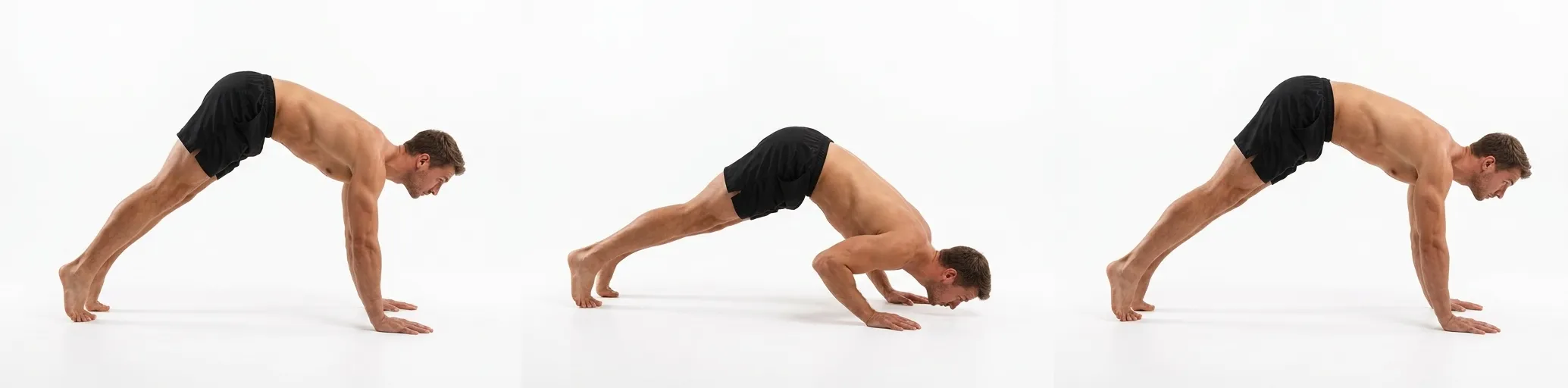
The pike headstand pushup is the first rung on the Handstand Pushups branch: a pressing movement performed from a pike position where the head lightly touches the floor at the bottom of each rep. It looks unassuming next to a freestanding handstand pushup, but it is where the shoulder pressing strength for every harder variation in the branch actually gets built.
What Is the Pike Headstand Pushup?
Start with your hands and feet on the ground in a pike shape, hips high and legs relatively straight. Bend your arms and shift as much bodyweight forward onto your hands as you can without tipping over, lowering your head down to lightly touch the floor, then press back up to the starting pike. Because your feet stay on the ground the whole time, the movement is closed-chain and forgiving of balance mistakes — the entire focus is on building pressing strength in a position that mimics the shoulder angle you will need overhead. It sits at the base of the Handstand Pushups branch, a vertical pressing line that runs in parallel with the Handstands branch rather than replacing it.
Prerequisites
The pike headstand pushup has no formal prerequisite node in the BodyTree progression — it is the entry point of the branch. That said, you should be comfortable holding a basic plank and pushup position, and it helps to already have some experience with a wall handstand from the Handstands branch, since the pike headstand pushup borrows the same shoulder-elevated, hollow-body setup. If you cannot yet hold a pike position with your hips stacked over your shoulders for several seconds, spend a week or two on that shape before adding the pressing motion.
The Progression Chain
Each step raises your hips relative to your hands, closing the shoulder angle further and shifting more weight onto your arms. The box headstand pushup elevates your feet to steepen that angle; from there the eccentric wall variation teaches you to control the full range under load before you attempt to press the concentric portion against the wall. By the freestanding handstand pushup, you are pressing your entire bodyweight overhead with no support at all.
Sets, Reps, and Training Frequency
This is a concentric-type exercise in BodyTree: the unlock standard is 3 sets of 15 reps with clean form before advancing to the box headstand pushup. Because the range of motion is short and the load is moderate for a beginner, most people can train this 2–3 times per week alongside other pressing work (dips, pushups) without excessive fatigue. Prioritize full range and a controlled tempo over speed — rushing reps to hit a rep count builds bad habits that show up again once the shoulder angle gets harder in later variations.
Coaching Cues
- Elbows track back, not out. Keep your upper arms close to parallel with your torso as you bend — letting the elbows flare wide makes the rep feel easier but trains the wrong pressing pattern and removes forward-backward stability.
- Load your hands, not just your head. Actively shift weight forward onto your palms as you descend. The goal is to bias effort toward your shoulders and triceps, not to rest your head on the floor and shrug back up.
- Scapulas up, then down, then up again. Start with your shoulder blades elevated, let them naturally settle as your head approaches the floor, then drive them back to elevated as you press out. This sequence protects the shoulder joint through the full range.
- Head in line, not tucked. Keep your head neutral in line with your spine as it lowers — tucking your chin or craning your neck to look forward adds unnecessary load to the cervical spine.
Common Mistakes
- Staying too upright. If your hips do not travel high and your weight never shifts onto your hands, you are performing a modified pushup, not a headstand pushup, and the carryover to later pressing variations will be minimal.
- Flaring the elbows under fatigue. This is the single most common breakdown late in a set. It makes the last few reps feel achievable but bakes in a pattern you will have to unlearn at the box and wall variations.
- Rushing to the next progression. The pike headstand pushup feels easy once you can do a handful of reps, but skipping ahead before you hit the full 3x15 standard means you arrive at the box and wall variations without the base strength to control them safely.
Related Guides
Frequently Asked Questions
Is the pike headstand pushup safe for my neck?
Yes, when performed correctly your head only lightly touches the floor at the bottom of the rep; it is not a weight-bearing headstand hold. Keep your neck neutral and avoid tucking or craning to reduce cervical load.
Do I need a headstand hold before starting this exercise?
No. The pike headstand pushup is the entry point to the Handstand Pushups branch and has no prerequisite node, though prior comfort with a wall handstand from the Handstands branch makes the shoulder positioning feel familiar.
How is this different from a regular pushup?
The pike position elevates your hips and steepens the angle between your torso and arms, biasing the movement toward your shoulders and triceps in a way closer to overhead pressing than a flat pushup targets your chest.
BodyTree tracks your progression through all 251 calisthenics skills — automatically generated programs, video proof, and a community of serious practitioners.
Get BodyTree — Free on iOS & Android